Flying With a Toddler: What Actually Works
*This post contains affiliate links. If you buy through one, we may earn a small commission at no extra cost to you.
Every parent who has flown with a toddler has, at some point, sworn they’d never do it again — usually somewhere over a state they didn’t plan to remember. And then, a few months later, they book another flight. Because it does get easier, and because most of what makes it hard is fixable with the right prep, not luck.
This isn’t written by someone who’s never seen a toddler kick the seat in front of them. It’s the stuff that actually helps — the boarding line, the seatbelt sign, the forty minutes before landing when everyone’s patience runs out at once.
Before You Book: Timing Matters More Than You Think
The single biggest lever you have over how a flight goes isn’t a toy or a snack — it’s the flight you booked.
Time of day: nap-time flights work beautifully for some toddlers and disastrously for others. You know your kid. First-flight-of-the-day tends to run on time more often, which matters more than almost anything else. Our toddler does best on early morning flights before he’s skipped a nap.
Direct over convenient: a direct flight that’s an hour less convenient will almost always beat a connection. Re-boarding a toddler who just got settled is genuinely hard.
Shoulder season: if your dates are flexible, avoiding school breaks and major holidays means fuller flights and shorter tempers all around — and not just your toddler’s.
There’s no perfectly timed flight that guarantees an easy trip. The goal isn’t a perfect flight — it’s stacking the odds in your favor.
Car Seat, CARES Harness, or Lap Child?
This is the question that causes the most pre-flight stress. Children under 2 are allowed to fly as a “lap child” on domestic flights at no extra cost, but the FAA strongly recommends against it — their guidance is that every child is safest in their own seat, secured, for the whole flight. Turbulence is the main reason: it can happen with no warning.
Your three real options:
A full car seat in its own purchased seat — the safest option, and it does double duty once you land and need one for a rental car. We have a cheap car seat we travel with so we don’t have to worry about it getting dirty or damaged if we end up checking it.
The CARES harness — the only FAA-approved harness-style alternative, about a pound, folds into a small pouch. Works for kids 22–44 lbs who already sit upright well on their own. A great middle ground if you don’t need a car seat at your destination.
Lap child — free, and sometimes the only realistic option. Not the FAA’s recommendation, but a legal and common choice. Ask at check-in about a spare seat; gate agents will often let you use an empty one at no charge.
Where They Should Sit
Seat selection is one of the only parts of flying with a toddler that’s fully in your control, so it’s worth the extra few minutes when you book.
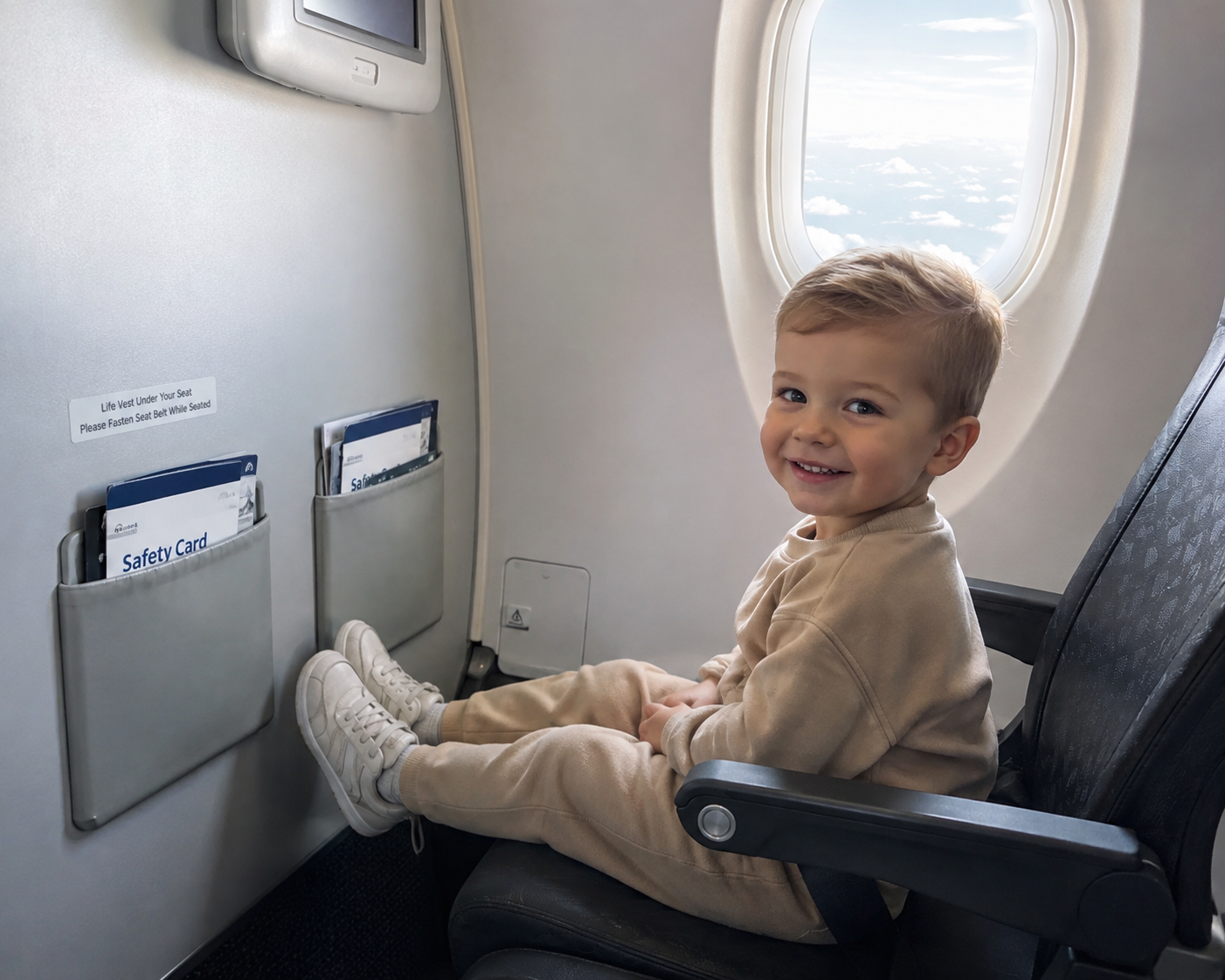
Bulkhead: the most floor space of any economy row, sometimes with a bassinet attachment. Trade-off: nothing can be at your feet during takeoff and landing. This is always our preference so we don’t have to stress about our little kicking someone’s seat.
Aisle vs. window: aisle makes bathroom runs and pacing easier; window gives you a genuine distraction tool during takeoff, landing, and turbulence — “look, there’s a truck!” works better than most toys in those moments.
The back of the plane is louder from the engines, which muffles a crying toddler more than you’d expect, and it’s closer to the galley for a reset walk.
Skip exit rows entirely — no child under 15 is allowed in one, and you’ll be moved if you end up there by mistake.
The Toy Kit That Actually Works
The goal isn’t bringing every toy your toddler owns — it’s a small, varied kit revealed slowly. One new thing every 30–45 minutes buys far more flight time than dumping it all out at once.
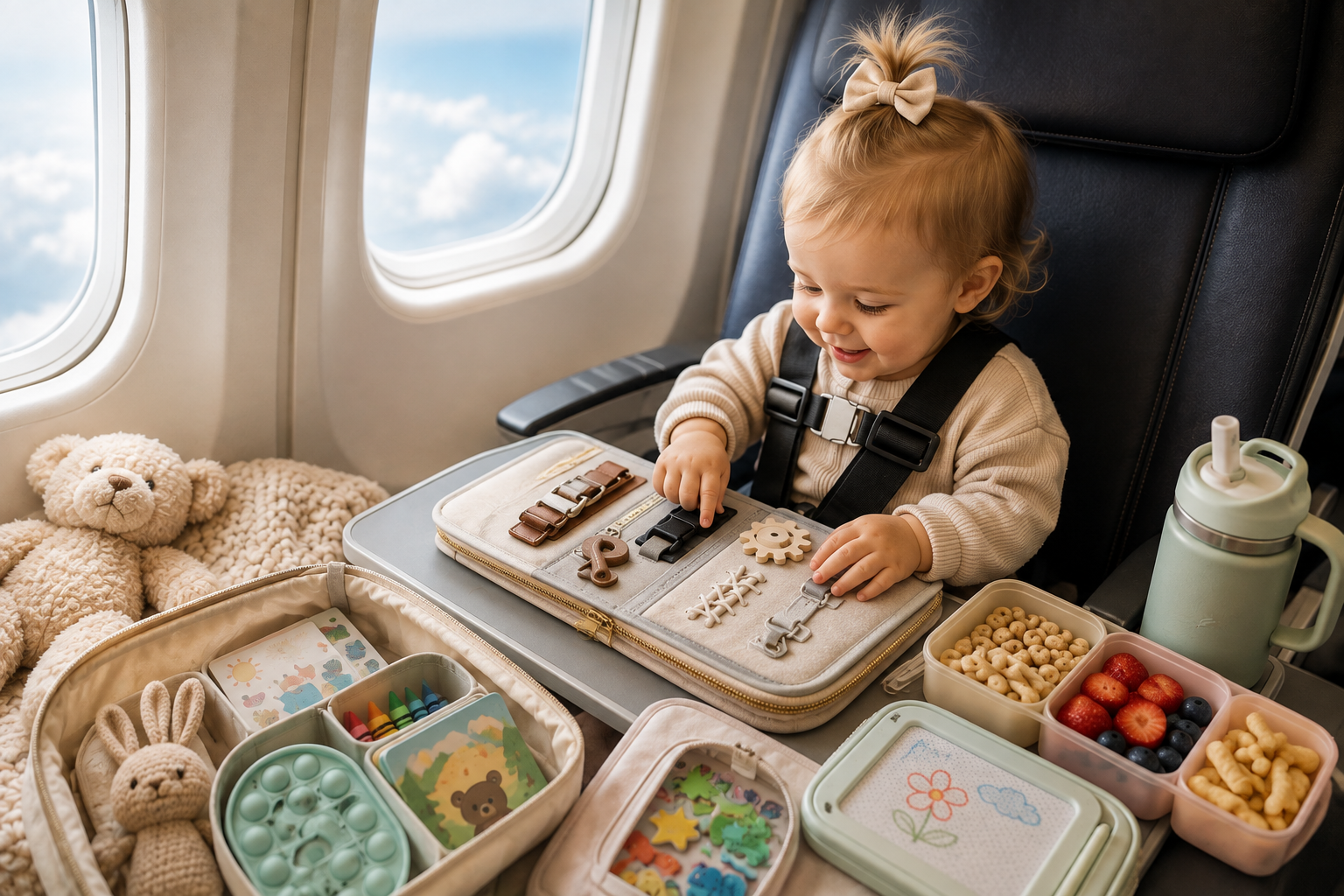
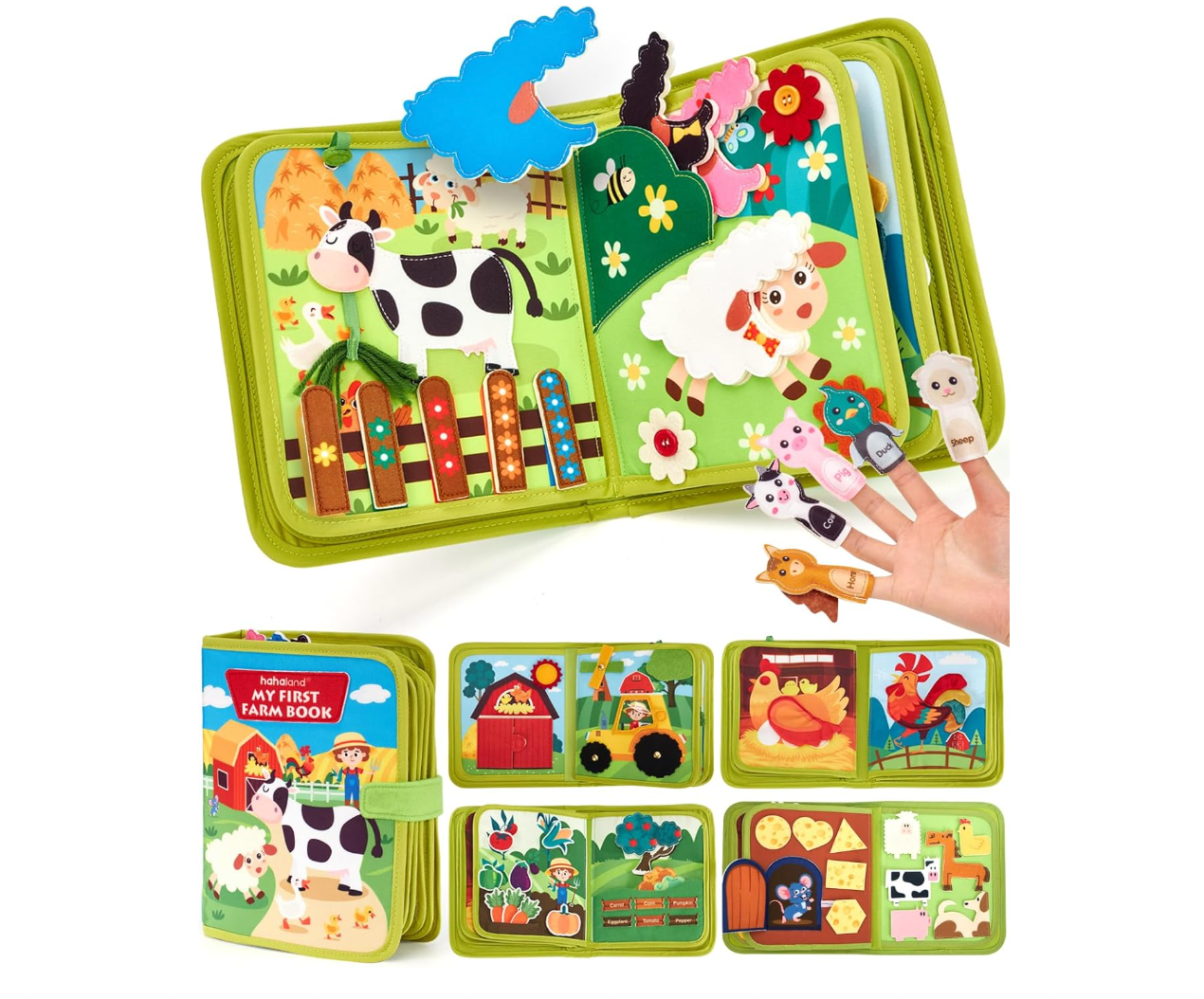
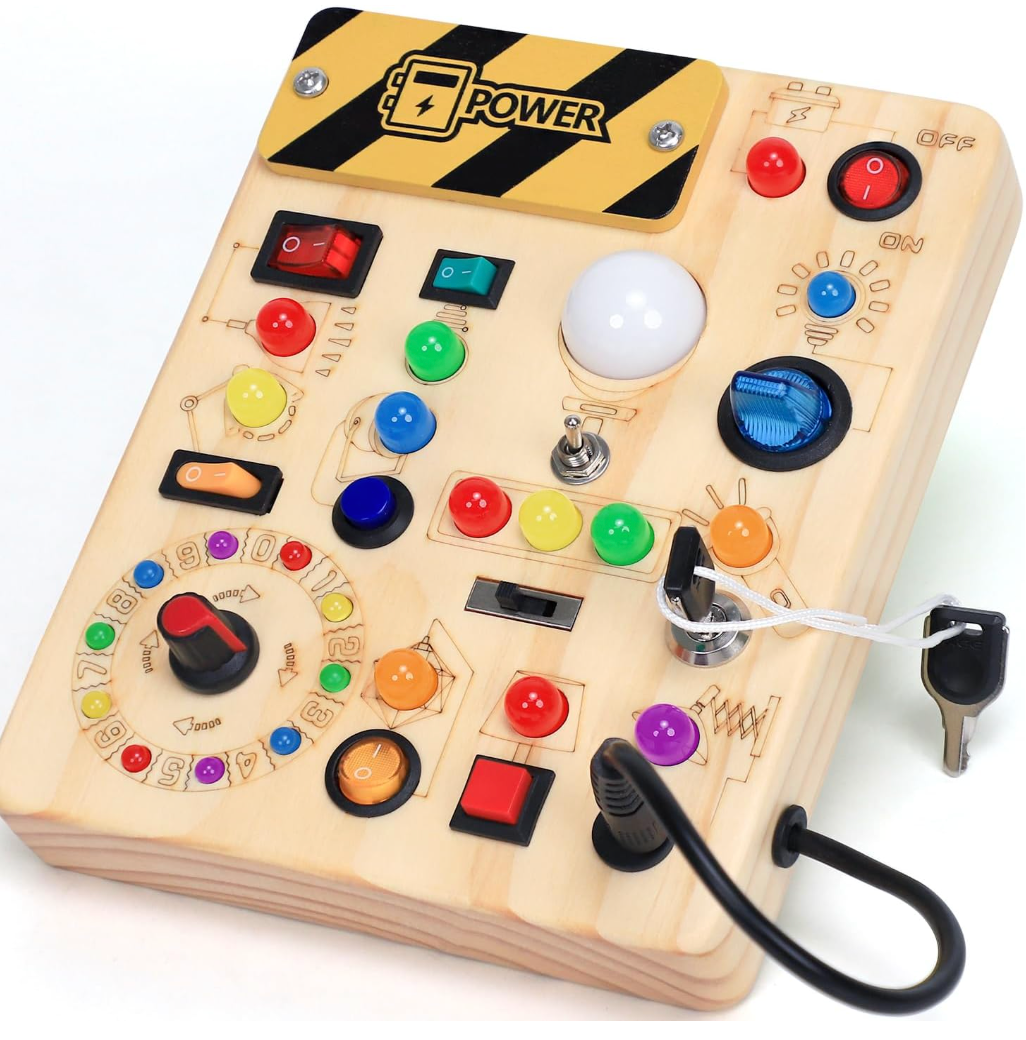
A busy board or switch toy — latches, zippers, and buttons hold attention longer than almost anything else on this list, and it can’t roll away down the aisle. This was our favorite busy book, and we never travel without this switch board.
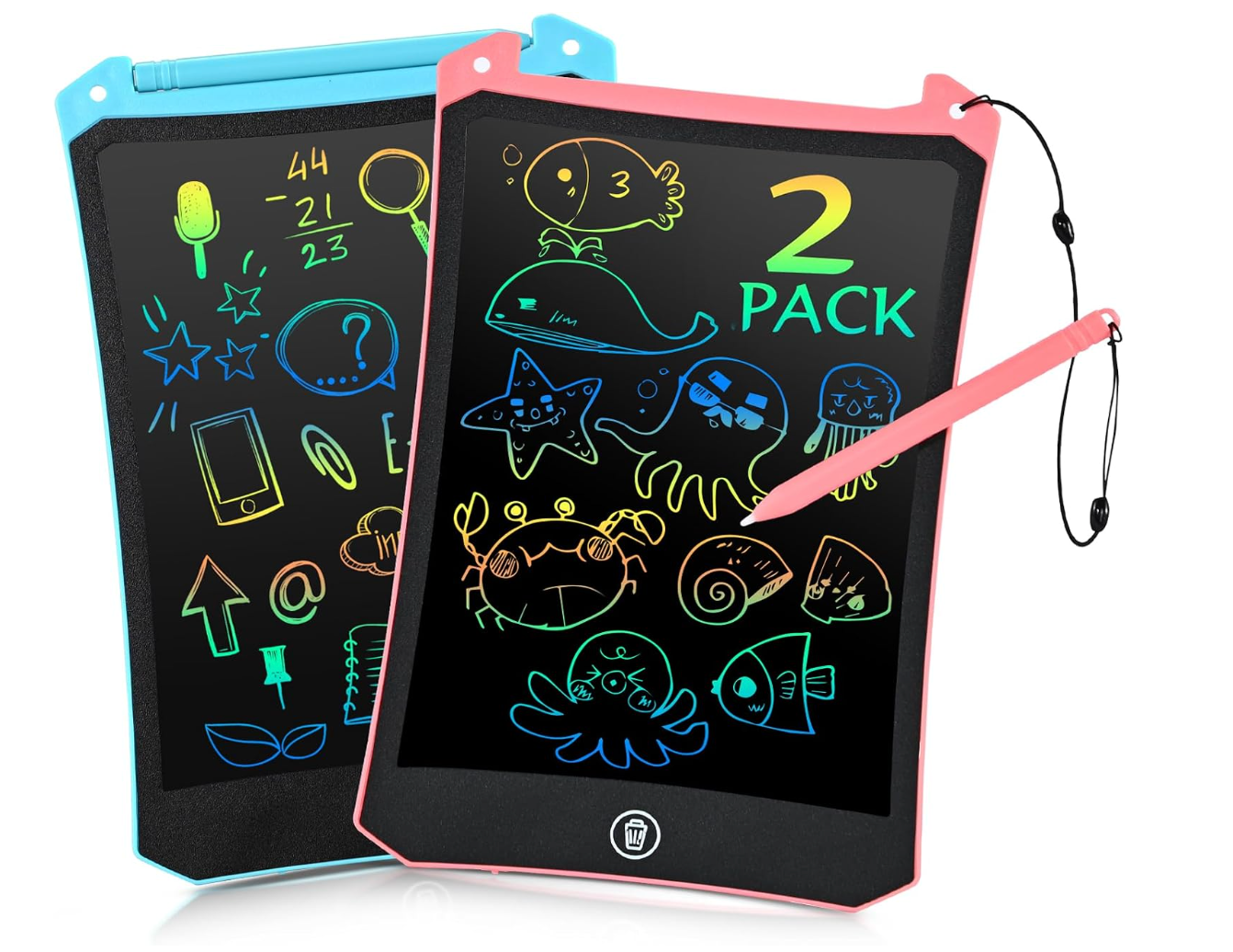
A mess-free magnetic doodle board — reusable the whole flight, nothing to lose, real sense of control for a toddler. This is our favorite because the pen is attached.
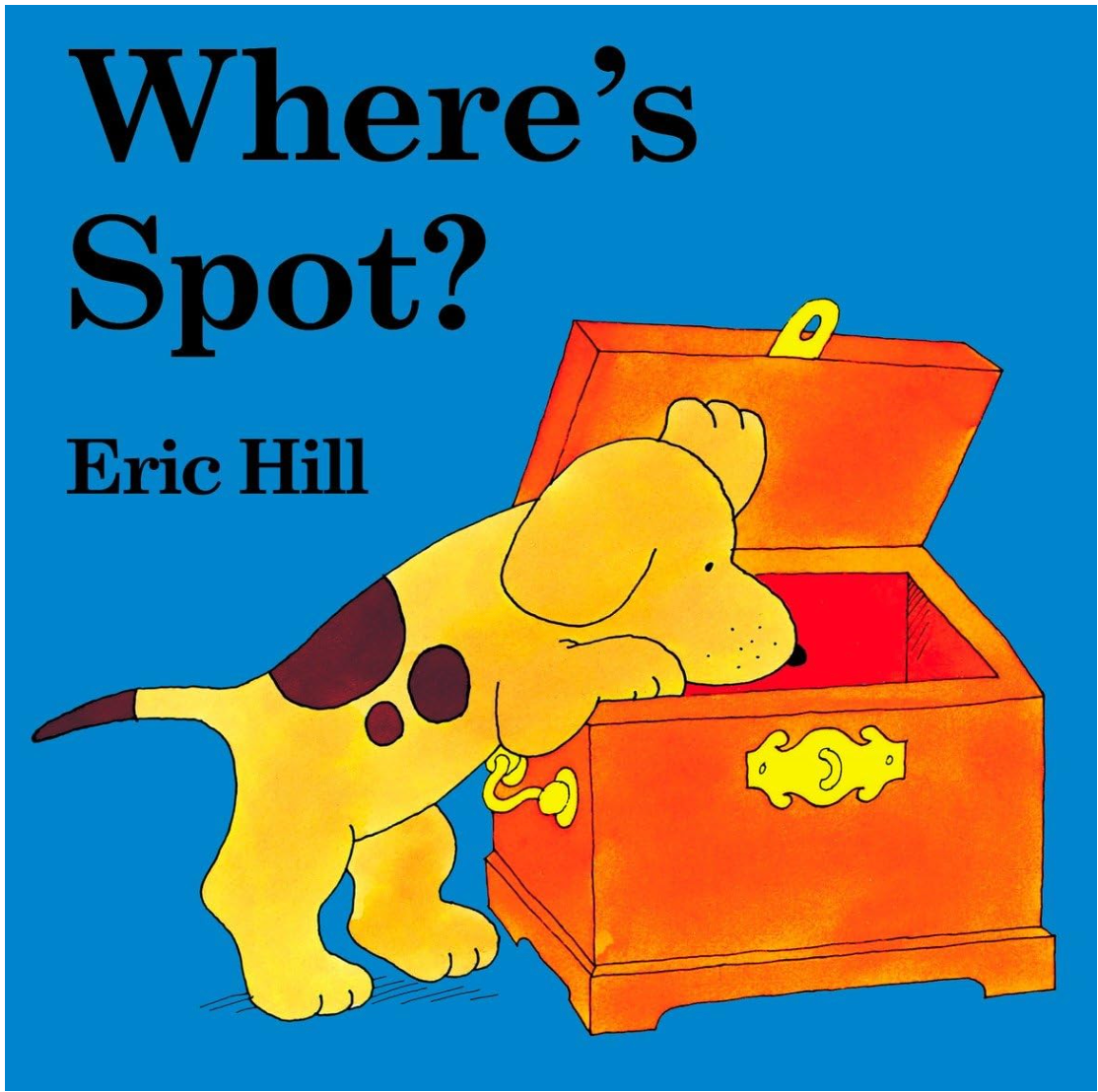
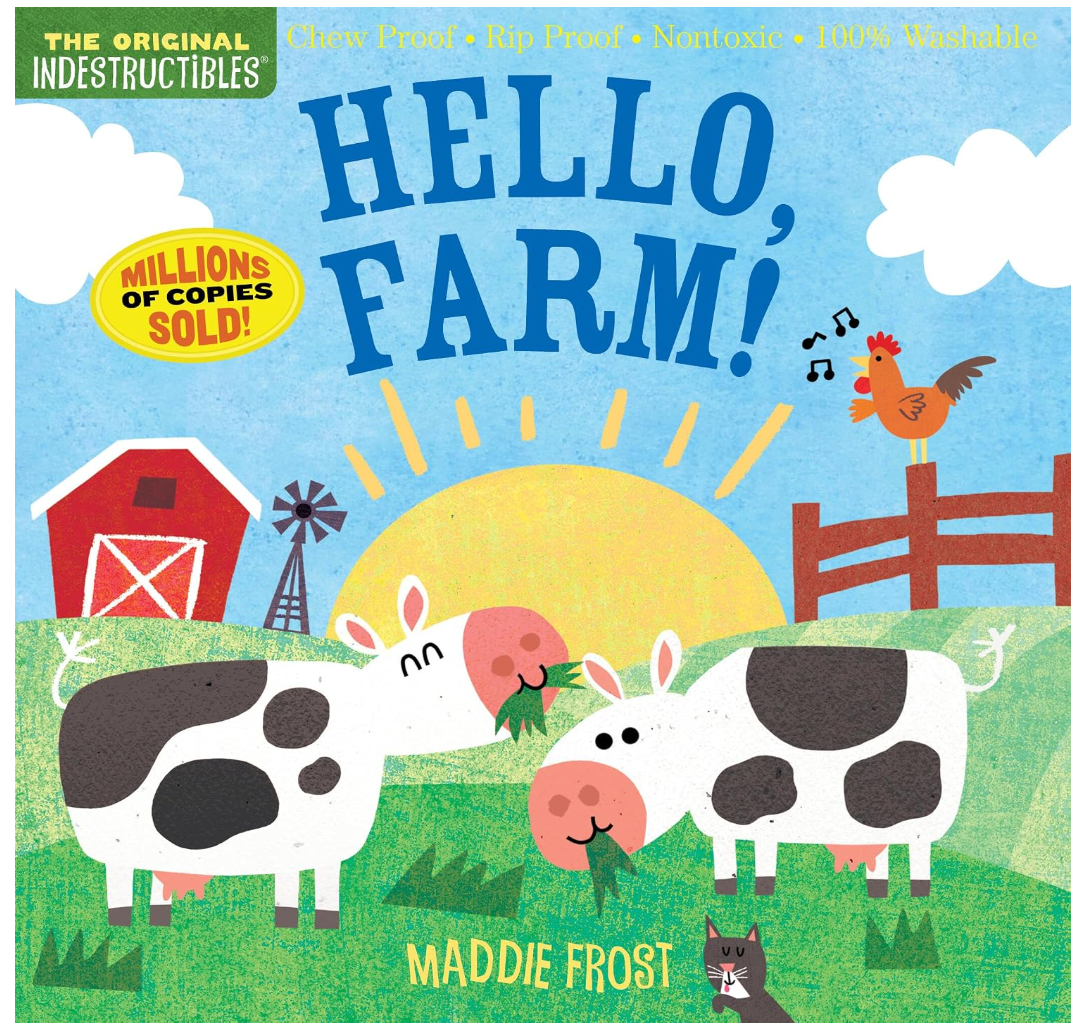
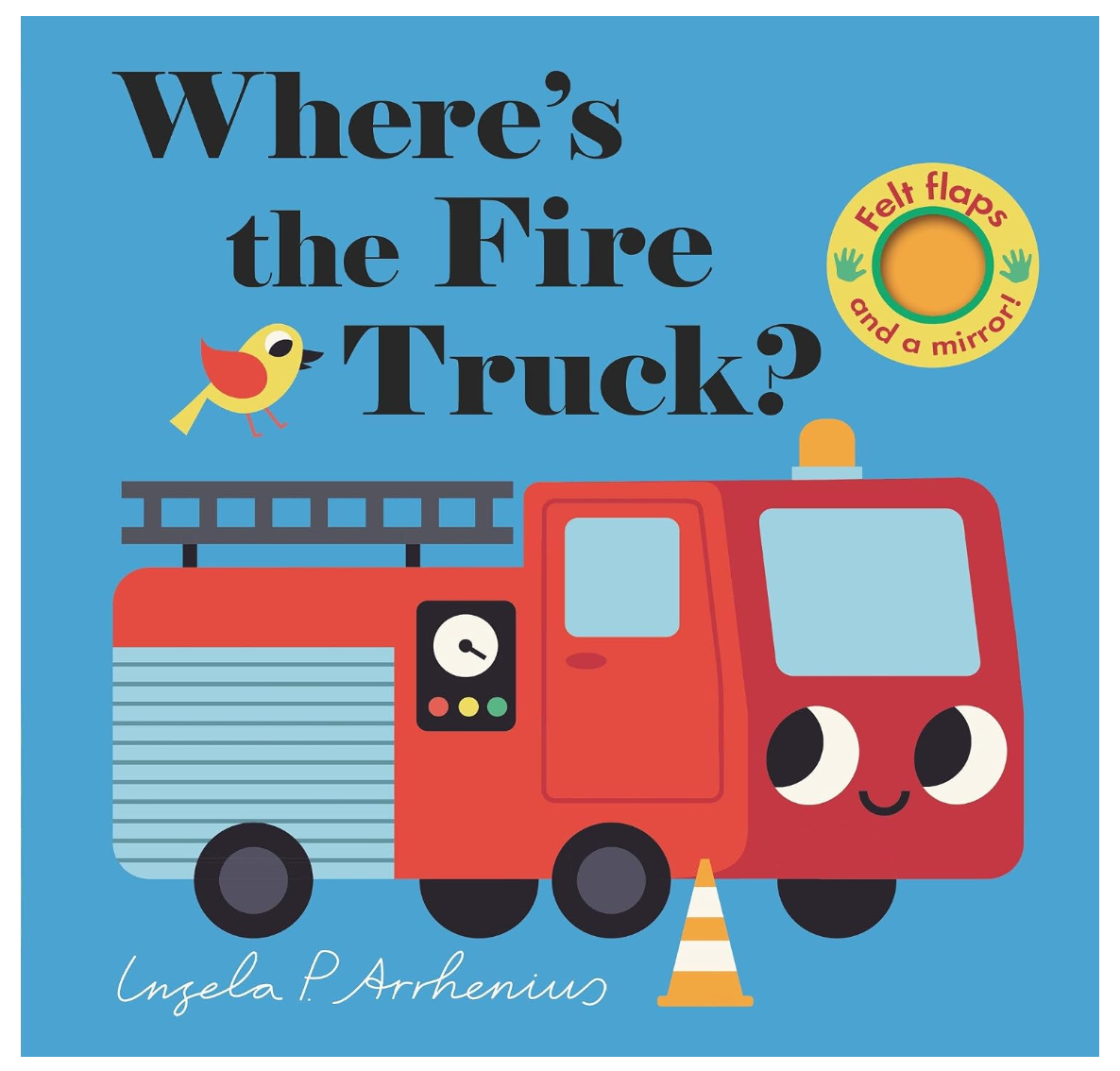
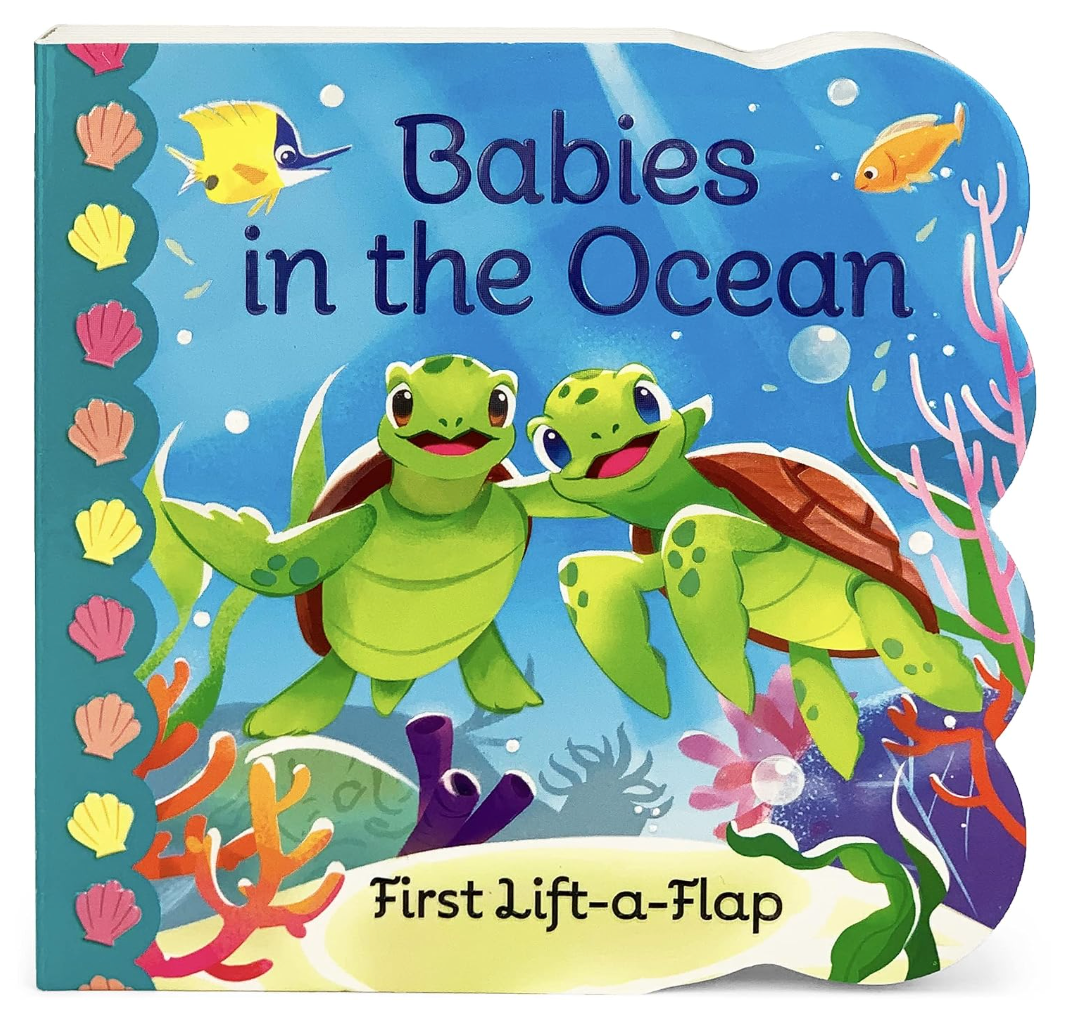
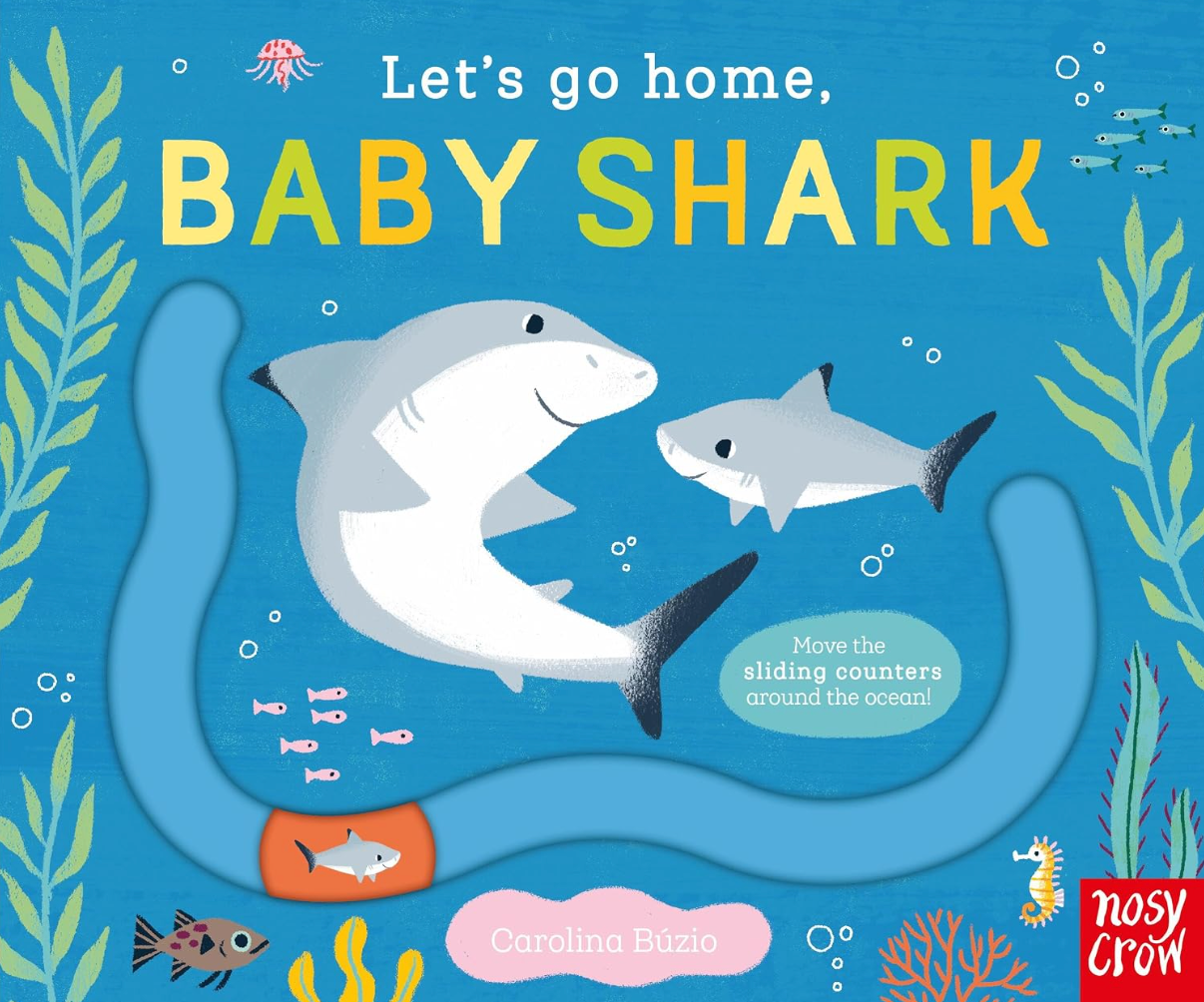
New books, wrapped individually — unwrap one every 30–45 minutes. The unwrapping is half the fun, and genuinely new holds attention longer than an old favorite from home. I have found that interactive books (the ones where they pull down flaps) are the best the older they get. Below are our favorites.
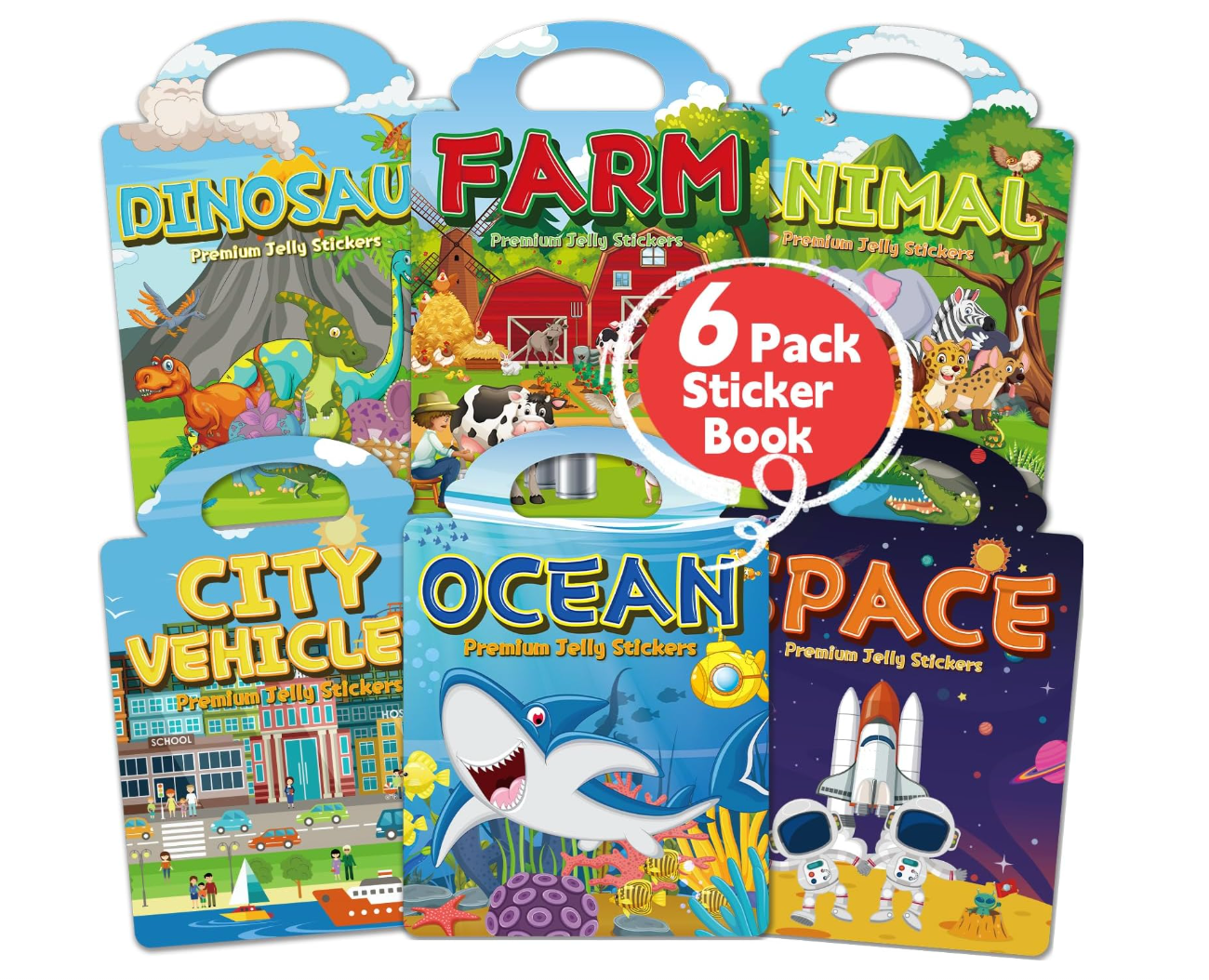
Reusable sticker book- easy to carry and reuse for multiple trips. We have found that jelly stickers are the best quality stickers that don’t stick in hair and can easily be reused.
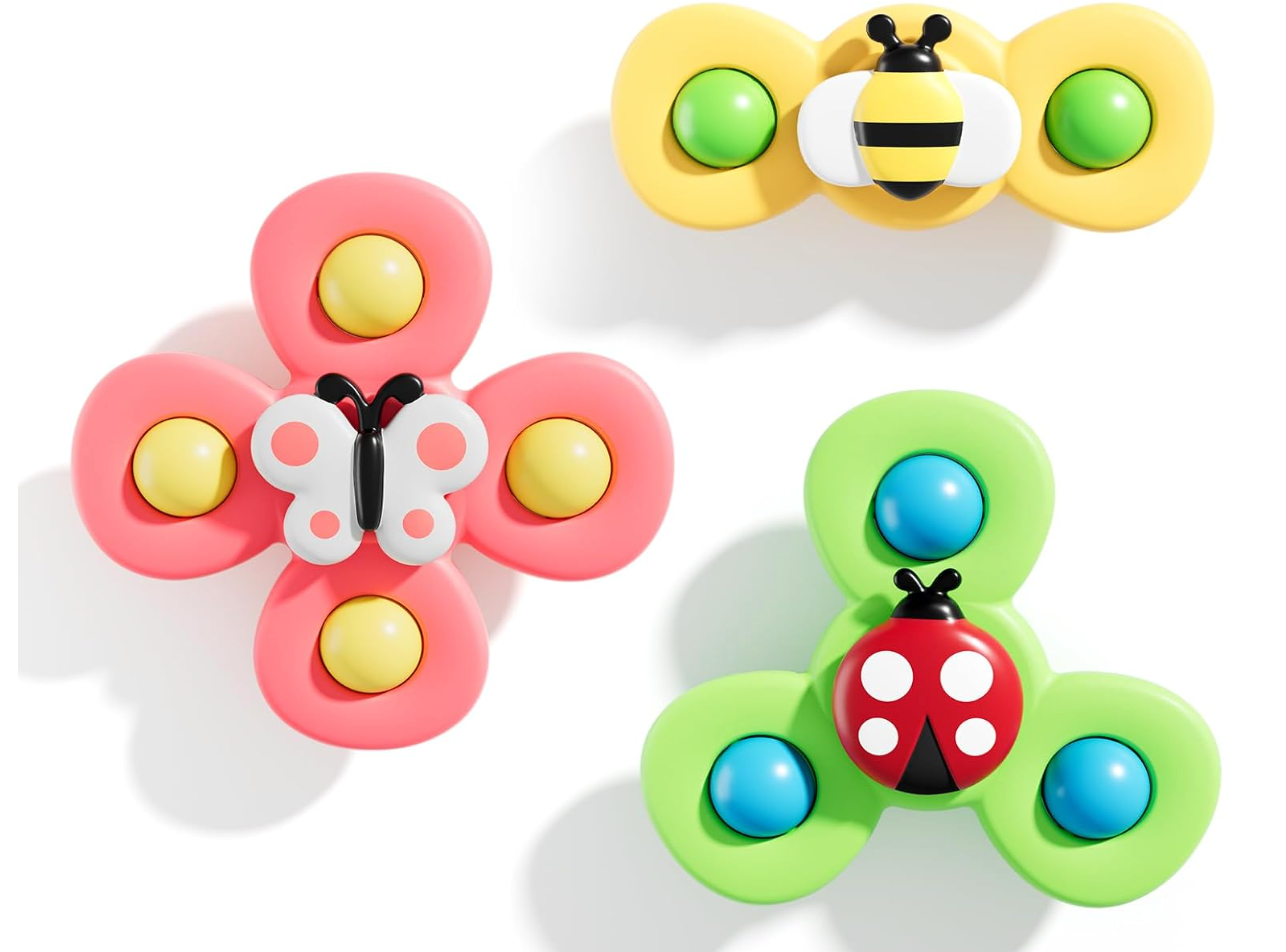
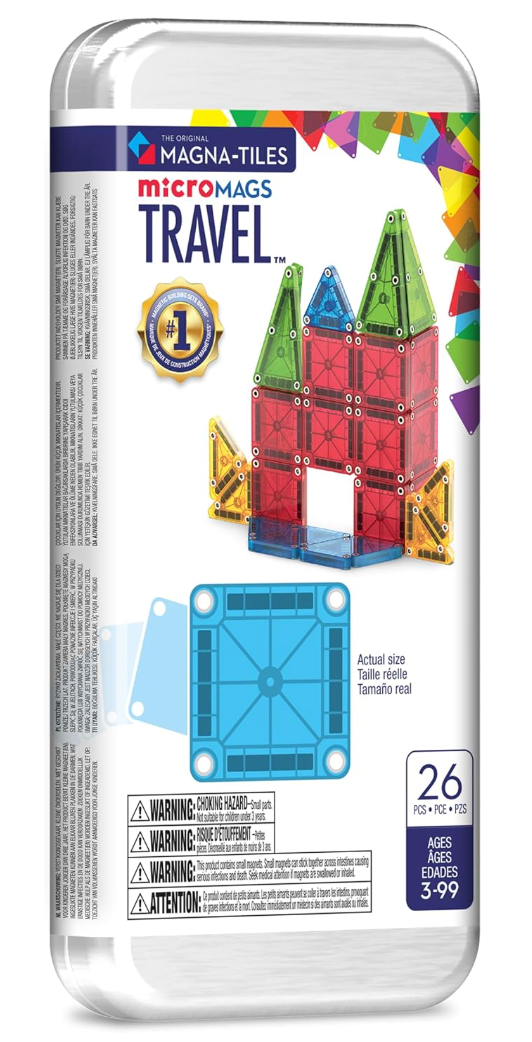
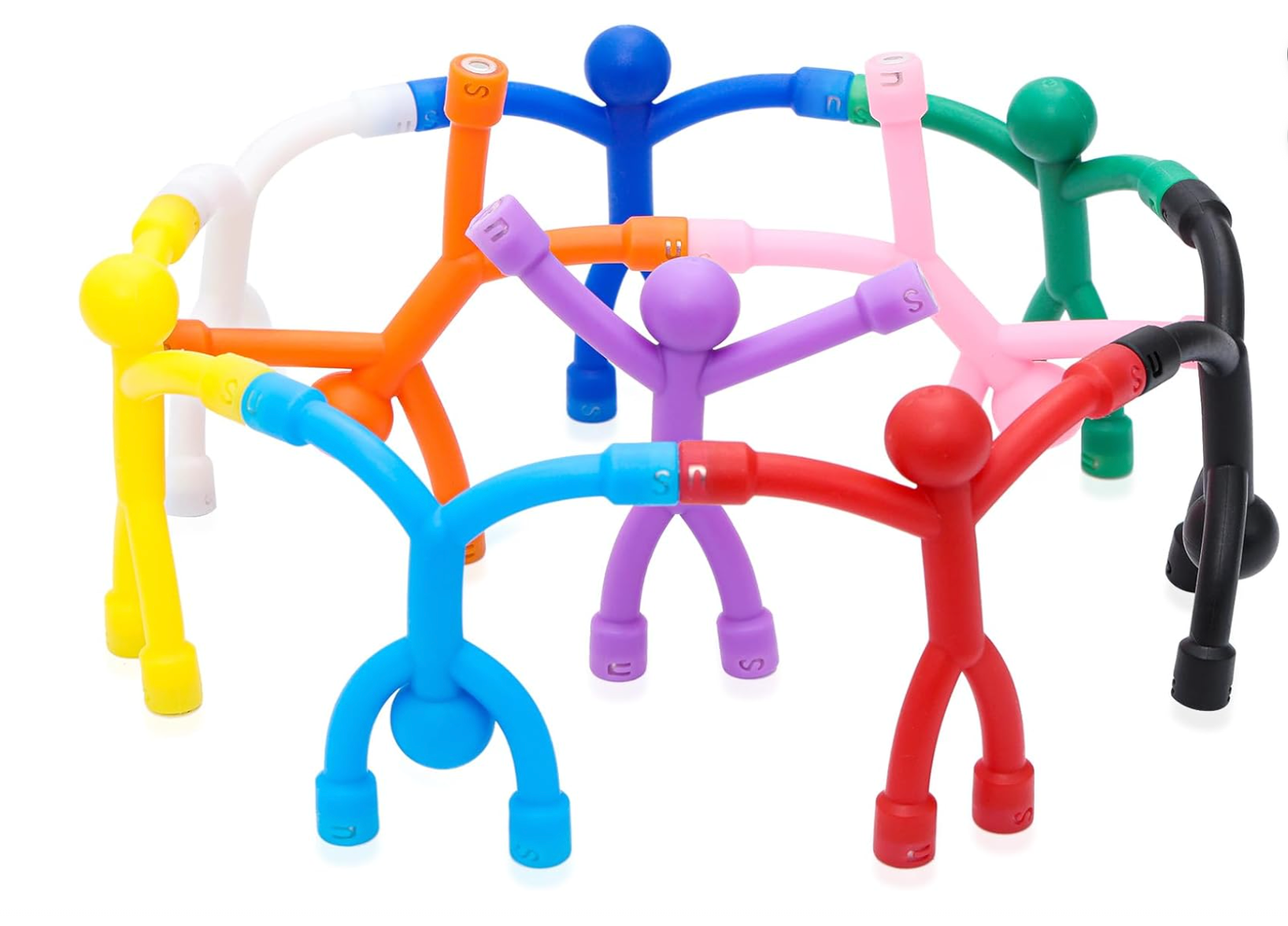
Round it out with a fidget, a couple of small figures in a clear bag, window clings, and one familiar favorite toy for when nothing new is landing. If all else fails, bring a roll or painters tape!
The Snack Strategy
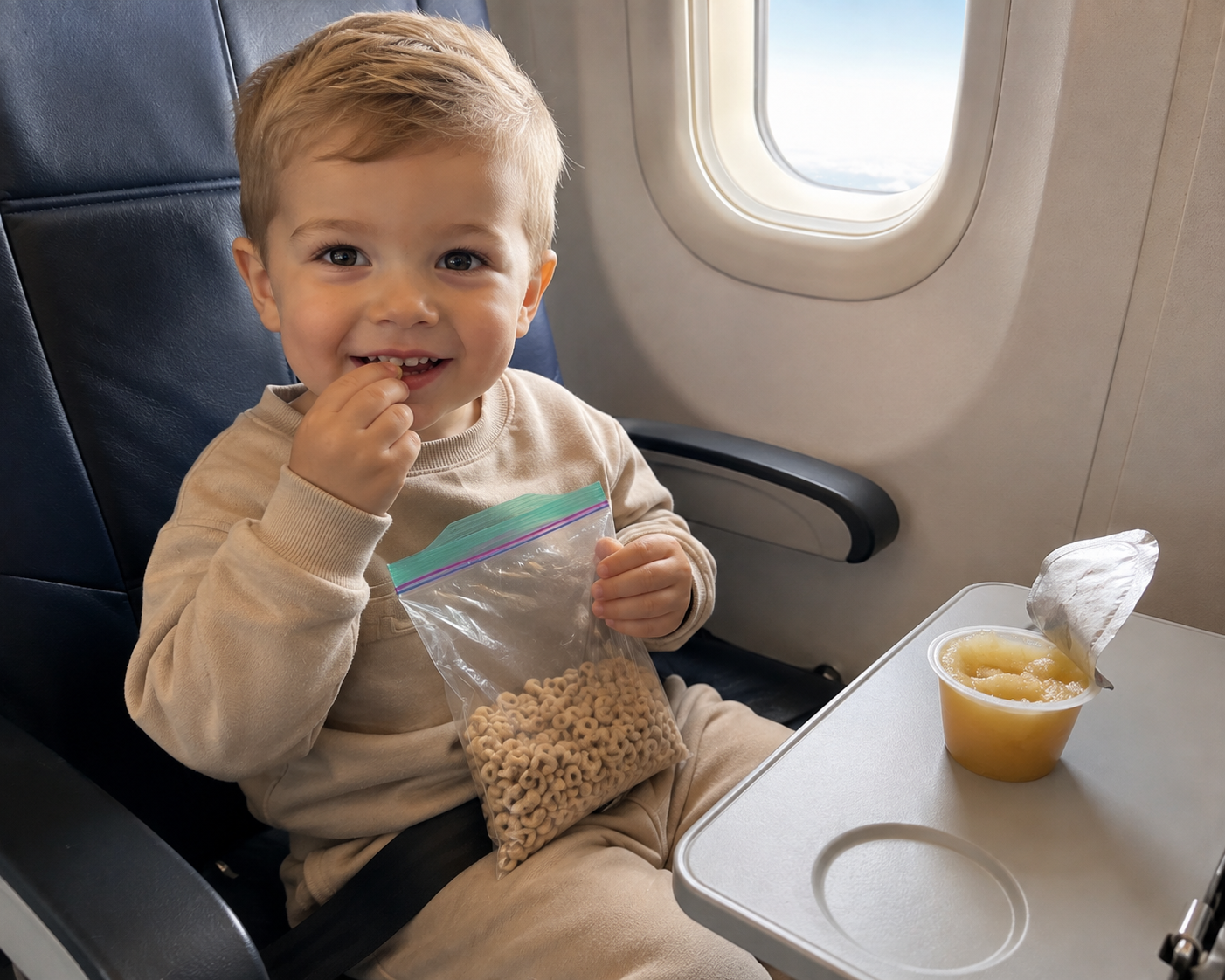
Pick two or three “special travel-only” snacks — treat-level, slow to eat, and tested at home first, more than once. A flight is not the moment to discover a new snack causes a meltdown of its own. And always pack one completely familiar snack as backup for the moment everything else has failed.
Offer something to chew or suck during takeoff and landing specifically — it helps little ears equalize with the pressure change.
We also have a few “flight-only” snacks that make travel days feel extra special. Certain cereal flavors and MightyMe peanut butter puffs only make an appearance when we’re flying, so they’re still exciting enough to buy us a few precious minutes of peace. Don’t forget those applesauce pouches!
If They Have a Meltdown Mid-Air
It might still happen, even with perfect prep. That’s not a reflection of you — it’s a small person in an overstimulating tube with recycled air and nowhere to run.
Get low, get close, and name what’s happening: “You’re so tired of sitting. I know.”
If the seatbelt sign is off, take the walk to the back galley — new scenery, new movement, a break for everyone around you too.
Bring out the held-back snack or toy. This is exactly the moment they were saved for. We hold back the sticker book for meltdowns. A new reusable sticker book for each flight.
Let go of the audience. Most people flying have either been where you are or will be someday.
Screens on the Plane, Even If You’re Usually Screen-Free
If your family avoids screens day-to-day, a long flight is a reasonable place to make an exception — and it doesn’t undo the rest of your effort. Download everything ahead of time (in-flight wifi is unreliable), test the headphones at home first, and save screen time for the back half of the flight rather than the first thirty minutes.
One flight with a tablet doesn’t erase the other twenty-nine screen-free days this month.
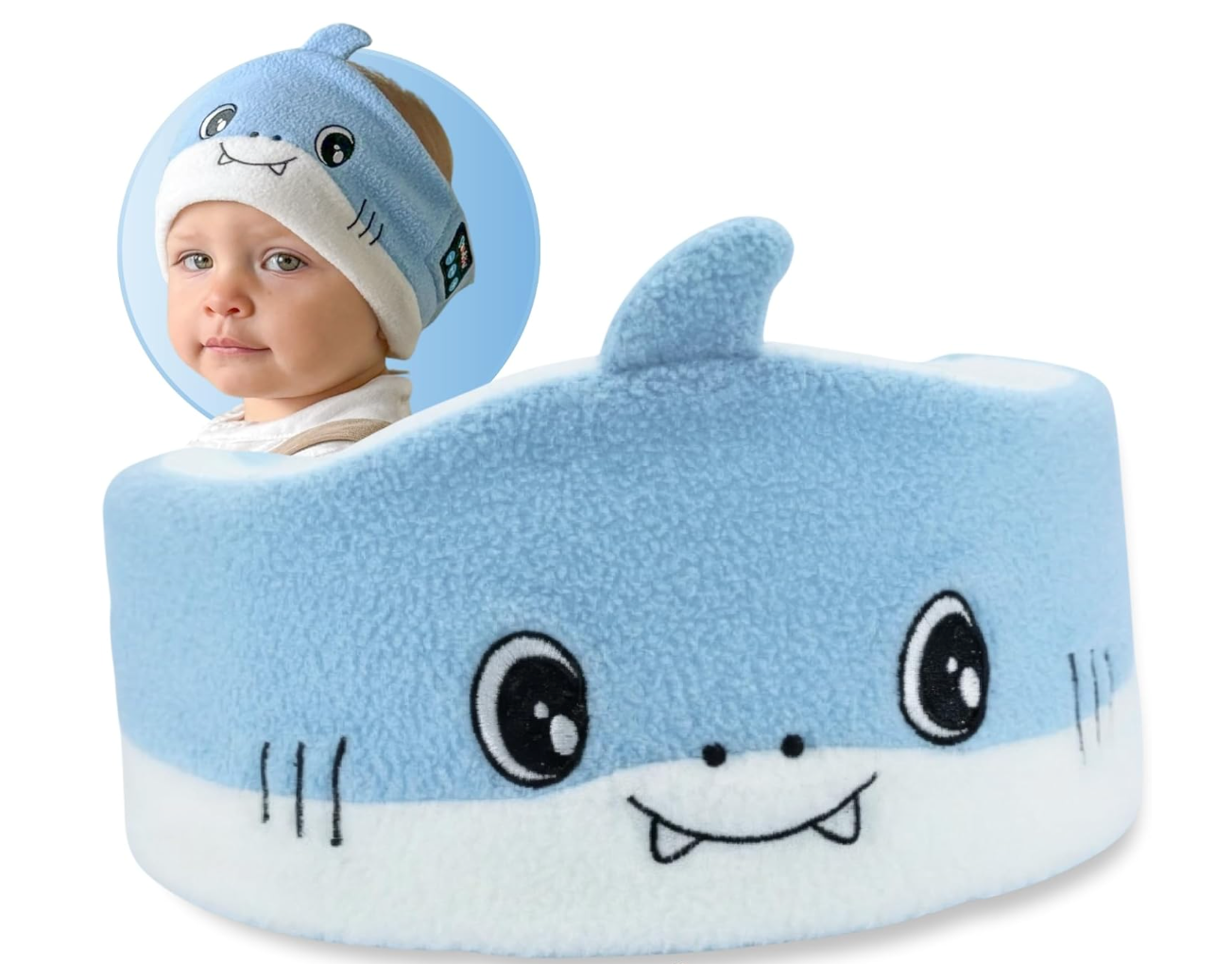
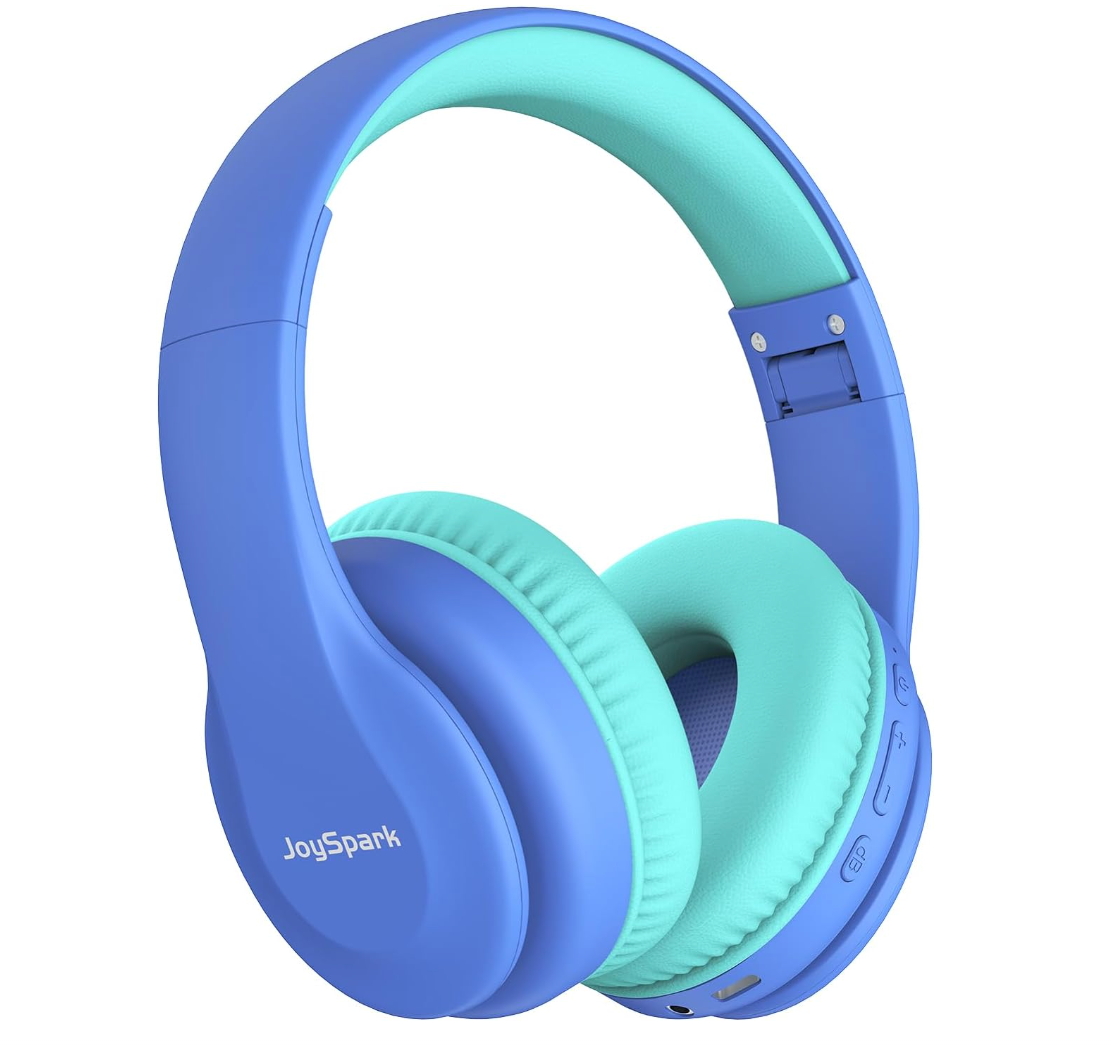
We tried the soft headphone bands and over-the-ear headphones. The headband type worked best until our toddler was 2.5 and then he preferred over-the-ear ones.
Pack the Diaper Bag Like You’re Preparing for Battle
We always pack about double the diapers and wipes we think we’ll need, plus at least two complete outfit changes for our toddler. And by complete, I mean complete—shirt, pants, socks, everything. Our personal peak blowout era was around 9–14 months, but every baby likes to keep their parents humble in their own special way.
A few things that have earned permanent spots in our flight diaper bag:
Large Diaper Bag: A bag that fits it all. I personally like a backpack so my hands are free to grab a running toddler.
Diapers: More than you think you need. Then throw in two more.
Wipes: Bring a full pack. They’ll clean everything from bottoms to tray tables to whatever sticky substance your child somehow discovers in Row 23.
2+ complete outfit changes: Consider three for a long-haul flight.
An extra shirt for YOU: This is the one everyone forgets—until the blowout becomes a team activity.
Ziploc or wet bags: Perfect for sealing up soiled clothes until you reach your destination. Nobody wants a poop-covered onesie marinating next to the snacks for six hours. You want the gallon size!
Portable changing pad: Airplane changing tables are tiny and not exactly known for their luxurious accommodations. We love the one that came with our diaper bag.
Diaper cream: Especially helpful on long travel days when your toddler may spend more time sitting in a diaper than usual.
Hand sanitizer: Because airplane bathrooms + diaper changes + toddlers. This is our favorite.
Tissues: Runny noses seem to know when you’ve left home. Travel-sized is perfect.
Bibs: A washable or disposable bib can save you from using one of those precious backup outfits.
Small trash bags: Great for diapers, wet clothes, spills, or any other unexpected disaster. We bring 2 gallon sized ziplock bags.
Empty water bottle/sippy cup: Buy or fill drinks after security, and bring way more snacks than seems reasonable. Airport delays have a way of turning one snack into twelve.
One of my favorite tricks: Make a mini diaper-changing kit with a diaper, a small pack of wipes, disposable changing pad, and a bag for dirty clothes/diapers. Keep it near the top of your carry-on so you can grab the whole thing and head to the bathroom without dragging your giant diaper bag down the airplane aisle.
And whatever you do, do not put all the backup clothes in your checked luggage. That adorable spare outfit sitting peacefully under the plane will be of absolutely no help when your toddler has a blowout somewhere over Kansas.
As our toddler got older, we quickly learned that two separate bags made travel so much easier. We keep one bag strictly for entertainment—snacks, toys, books, and anything else we’ll use to keep them happily occupied—and a separate diaper bag with all the essentials for keeping them clean, dry, and somewhat presentable. It makes it so much easier to grab exactly what you need without digging through diapers and wipes every time someone demands a snack.