The Toddler Playroom Tricks That Actually Work
Spoiler: it's not more toys. It's one good piece of furniture, a cozy spot on the floor, and the sneaky little habit of putting most of the toys away. Let's talk playrooms.
This post contains affiliate links. If you buy through one, we may earn a small commission at no extra cost to you.
Let's be honest: nobody dreams of a playroom that looks like it lost a fight with a toy store. Blocks in one corner, half a puzzle under the couch, a single sock-monkey standing sentinel in the middle of the floor like it's guarding something important. We've all been there.
The good news is that a calmer playroom doesn't take a renovation. It takes two things: one piece of furniture that gives every toy a home, and a cozy landing spot on the floor that tells your toddler "this is the play zone." That's it. Here's how to pick both, plus the one habit that will do more for your sanity than any bin ever could.
Step 1: Pick One Storage Piece (and Stop There)
Here's the trap: you buy one shelf, it fills up, so you buy another, and eventually your "playroom" is 70% furniture and 30% floor space to actually play on. The fix is to pick one real storage piece that can hold everything, with bins or cubbies your toddler can reach and dump out themselves (self-sufficiency win!). Here are five solid options depending on your space and style:
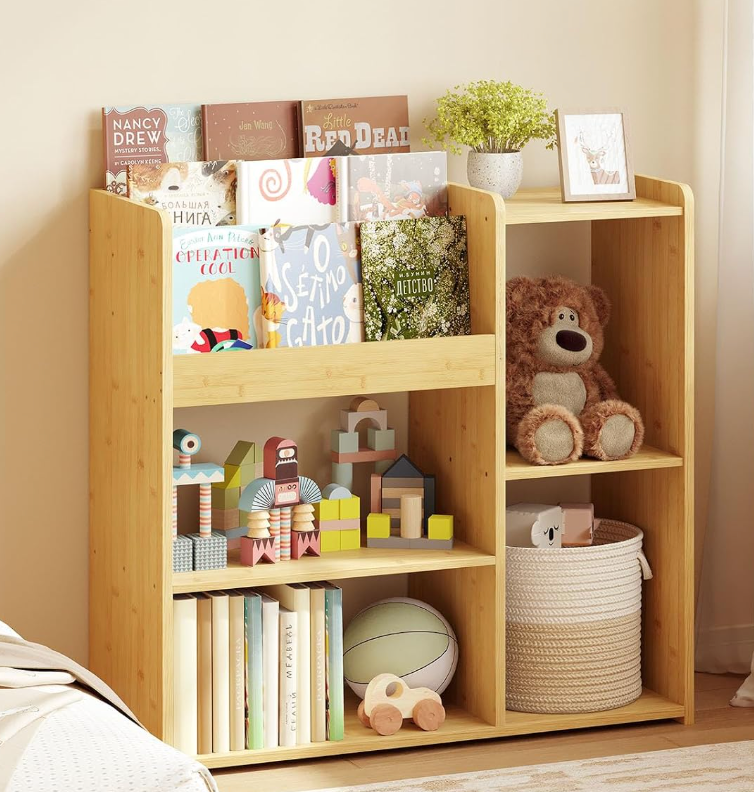
Option 1:
Good for playrooms that double as a living space — something that closes up neatly at the end of the day. Link
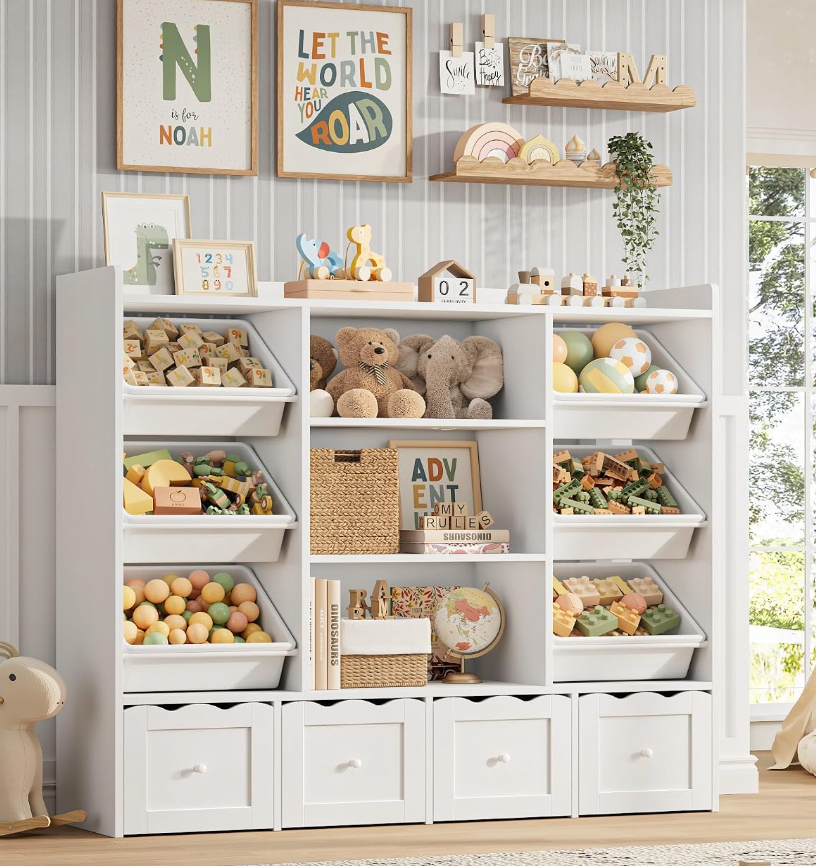
Option 2:
Built to grow with them — a piece that still works past the toddler years for books, games, and art supplies.

Option 3:
A great pick if you want easy, grab-and-go bins your toddler can reach without help.

Option 4:
Created for the reader in mind, but also has to keep their room organized.
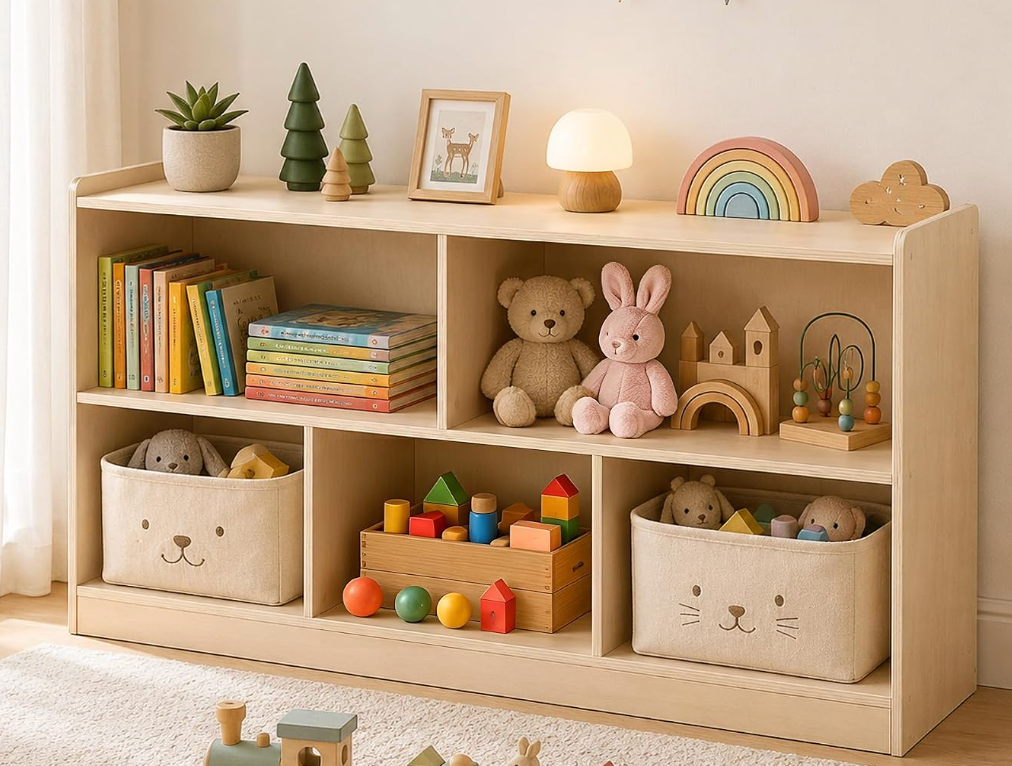
Option 5:
A sturdy all-in-one option if you want something that can hold toys, books, and bins all in the same footprint.
Quick safety note: whichever piece you choose, anchor it to the wall with the included tip-restraint hardware. Toddlers climb everything, including bookshelves — it takes two minutes and it's worth it.
Step 2: Add a Play Mat or Rug
A soft, defined spot on the floor does more psychological heavy lifting than you'd think. It tells your toddler where the play "zone" is, it's a comfy landing pad for all the sitting-and-stacking that toddler play involves, and it gives knees (yours included) a break from hardwood.
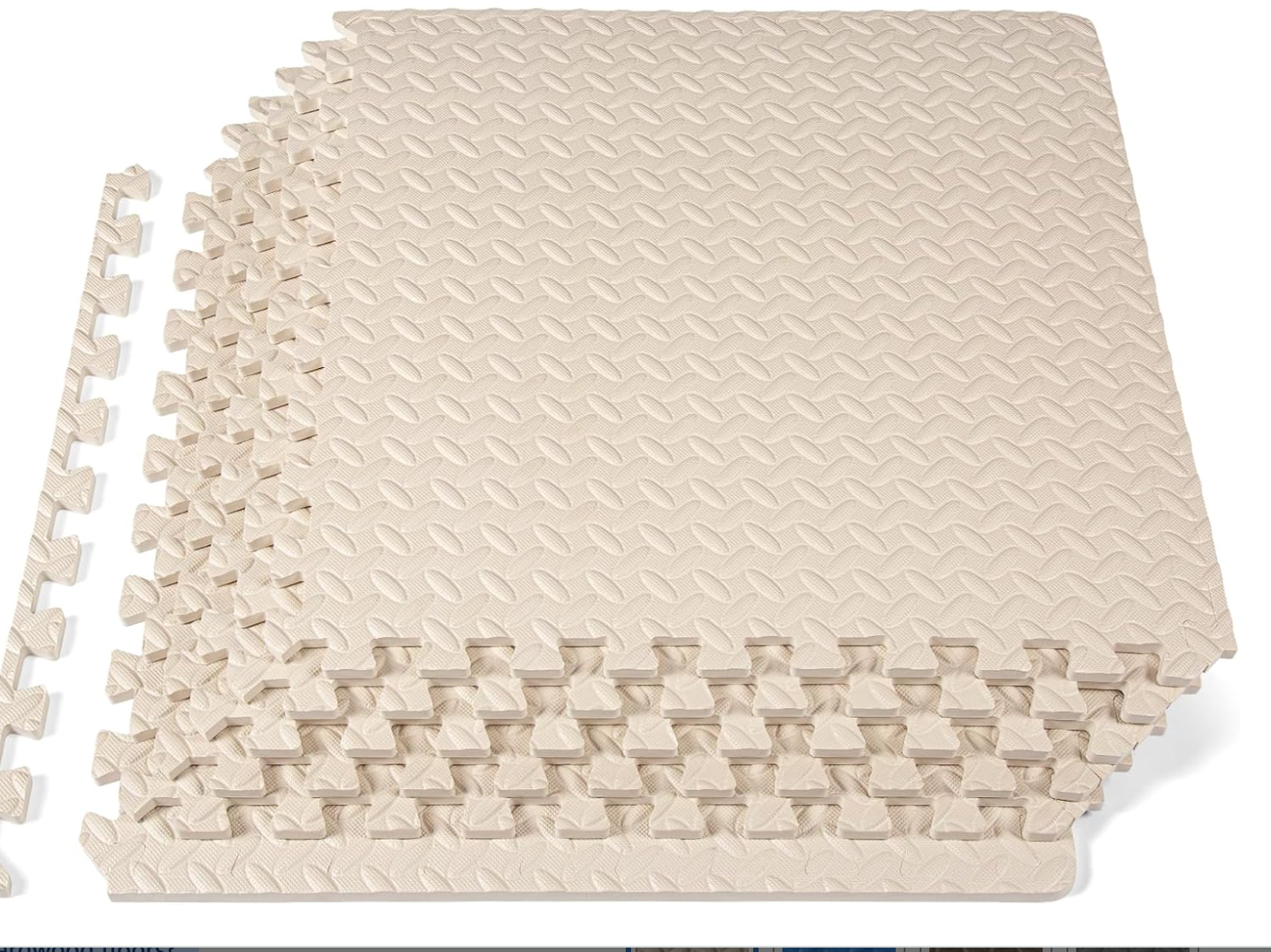
Foam Tiles
A cushioned option that's easy on knees and elbows during floor play, and wipes clean when snacks inevitably end up on it.
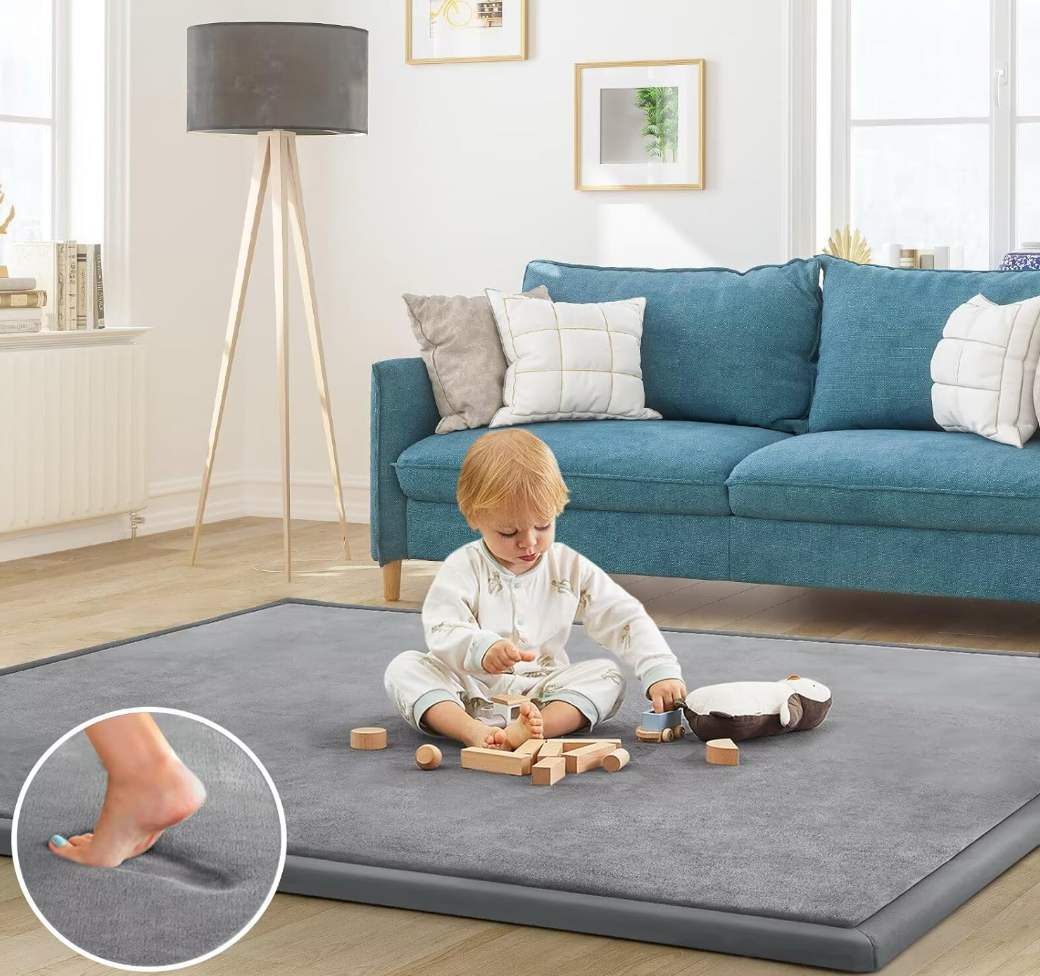
Padded Play Rug
A softer, more decor-friendly rug option if you want the playroom to look as good as it functions.
Step 3: The Real Secret — Toy Rotation
Here's the part that actually changes everything, and it costs nothing: don't put all the toys out at once. Pick a small handful for the week — think 6 to 10 toys — and store the rest out of sight. Then swap them out every week or two.
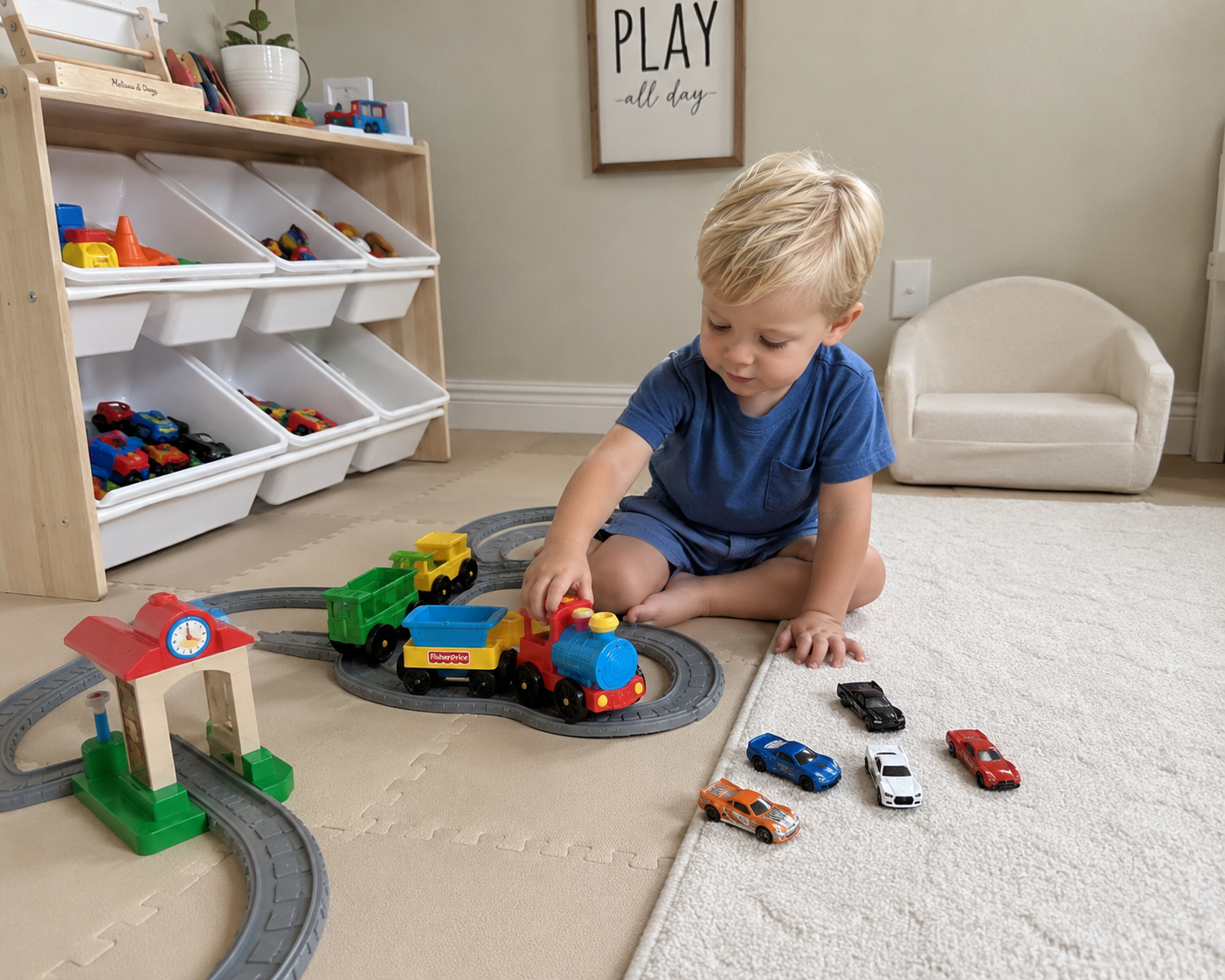
It sounds almost too simple, but there's real research behind it. In a University of Toledo study, toddlers who played in a room with just four toys played with each one roughly twice as long, and in far more creative ways, than toddlers given sixteen toys at once. With fewer options in front of them, kids interacted with each toy in more varied ways — stacking it, hiding it, feeding it, hammering with it — instead of just picking one up, glancing at it, and moving on to the next. With more toys scattered around, play sessions were shorter and noticeably less imaginative overall.
Basically: a mountain of toys isn't a gift to your toddler's attention span, it's competition for it. Fewer choices means less overwhelm, longer focus, and more of that magical independent play where they're actually entertaining themselves (and you get to drink a coffee while it's still hot).
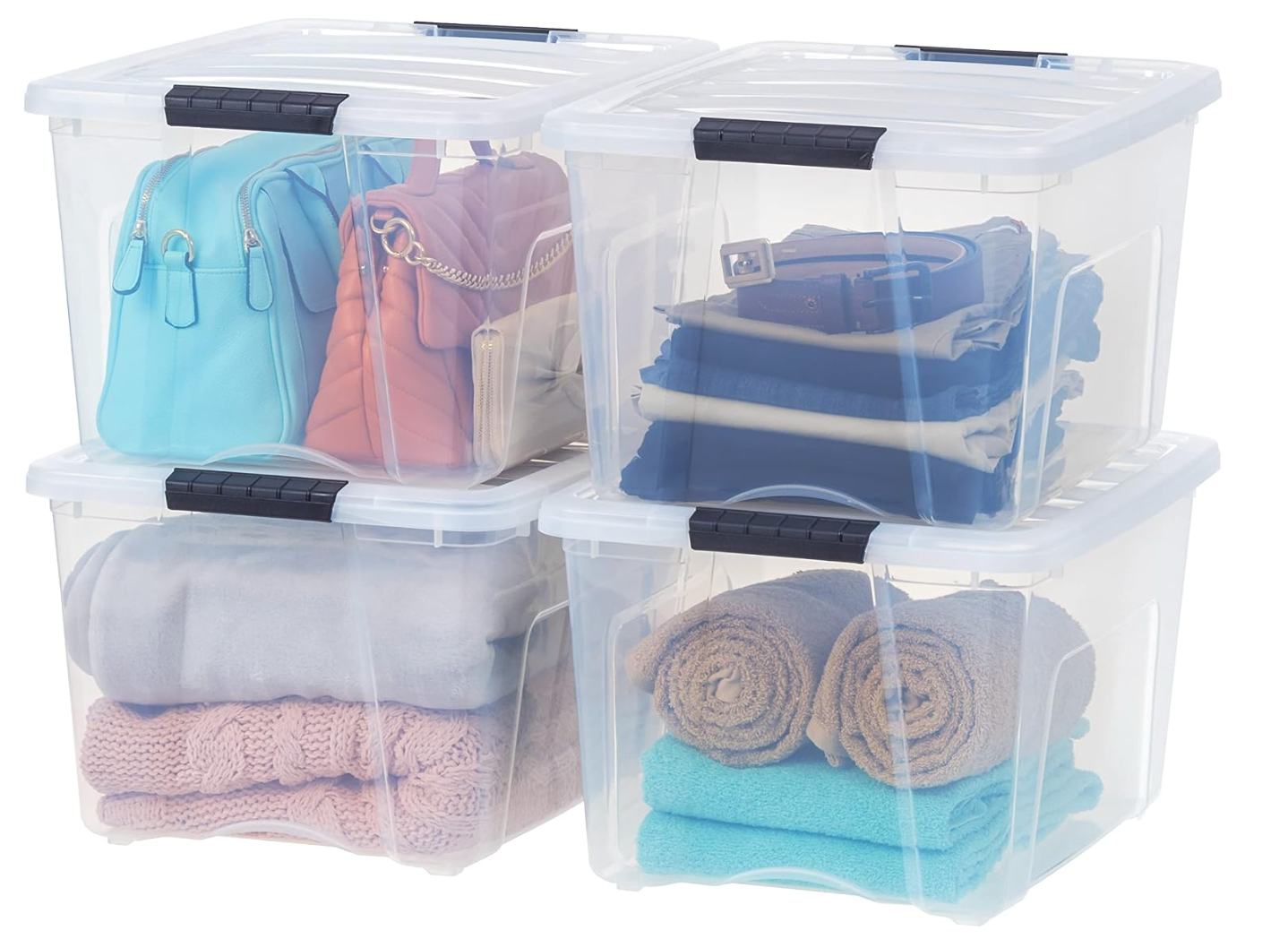
I use these clear totes so I can see what’s in each box. I have one for art supplies, one for music, one for puzzles, and one for toys I am trying to hide for the rotation. Link.
How to actually rotate toys without losing your mind
Sort into 3–4 bins ahead of time, mixing toy types in each (something to build, something to pretend with, something to move, something quiet). (Link to the bins I use)
Swap on a schedule that works for you — weekly is common, but even every few days is enough to make a "new" toy feel new again.
Let them "shop" the rotation bin. Bring it out and let your toddler pick 2–3 toys to add to the shelf themselves. Built-in decision-making practice, disguised as fun.
Store the extras out of the room entirely — a closet or the storage piece above with a closed door works well, since out of sight really does mean out of mind for toddlers.
Don't rotate everything. Leave a couple of true favorites out permanently. Rotation is for the toy pile, not the beloved stuffed dinosaur.
A Few More Playroom Facts Worth Knowing
A toddler's attention span is roughly 2–3 minutes per year of age — so a two-year-old naturally shifts activities every 4–6 minutes. That's normal, not a sign anything's wrong with the toy (or the room).
Open, low shelving tends to get used more than closed bins with lids, simply because toddlers can see what's inside without asking for help.
Clean-up becomes a lot more doable when there are only a handful of toys out. "Put the blocks in the basket" is a much easier task than "clean the whole room," and toddlers are far more likely to help with the former.
Labeling bins with a picture (not just a word) helps toddlers sort and put away toys independently, even before they can read.
The playroom doesn't need to be Pinterest-perfect to work — it just needs a home for the toys, a cozy spot on the floor, and a little less out at any given time. Your toddler gets calmer, more focused play. You get a room that's actually easy to tidy in five minutes flat. Everybody wins.